
 Building Caring Communities in Times of Demographic and Social Change
Report from the Sarajevo Meeting
Across Europe, care has become one of the most pressing and least resolved social questions of our time. In 2025, Hungary recorded the lowest number of births since statistical records began, a powerful indicator of deeper demographic, social, and economic pressures. Families and individuals are struggling to provide care both for children and for ageing relatives, often without adequate institutional, financial, or community support. This situation is not unique to Hungary; it reflects a wider European care crisis unfolding in the context of multiple, overlapping challenges.
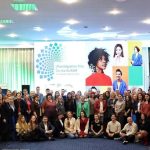
Against this background, initiatives that place care, solidarity, and community at their centre are gaining renewed importance. The Sarajevo meeting in October 2025 brought together women-led grassroots initiatives from Central and Eastern Europe to reflect on these challenges, learn from shared histories, and explore new pathways toward caring communities.
The Origins of Mother Centers in Hungary
Mother Centers (MCs) are community-based public spaces traditionally operated by mothers, for mothers and children within a local community. Their purpose has always gone beyond childcare: they offer spaces for connection, learning, mutual support, and honest conversation about the realities of care and everyday life.
In Hungary, the first Mother Centers emerged in the early 2000s, founded by young mothers responding to a lack of supportive infrastructure. At that time, social media did not yet exist in its current form, communication relied largely on email, and there were few public spaces where women could speak openly about motherhood, exhaustion, isolation, or the challenges of balancing care and work.
Driven by shared need and collective energy, these women gradually built local centres rooted in trust and self-organisation. By 2012, there were around 10–15 Mother Centers operating across the country. These initiatives came together to form the Hungarian Mother Center Network, which became a member of MINE – the International Mother Centers Network. This period was marked by optimism, growth, and strong international connections.
Disruption, Burnout, and Loss
Despite their social value, many Mother Centers proved vulnerable to changing political and economic conditions. Over time, funding became scarce, institutional support weakened, and the burden on volunteer organisers grew heavier. Burnout became widespread.
As a result, many Hungarian Mother Centers were forced to close. What had once seemed like a promising, self-sustaining movement gradually fragmented. Yet the needs that had given rise to these spaces never disappeared—if anything, they intensified.
A New Beginning in a Time of Polycrisis
By 2023, the context had changed again. Europe was facing a polycrisis: demographic ageing, declining birth rates, climate stress, economic uncertainty, and the long-term effects of the pandemic. Care—once treated as a private issue—was increasingly recognised as a collective and societal responsibility.
Municipalities began to show greater openness toward building caring communities, and companies also started to engage more actively in care-related initiatives. This shift created space for renewal.
Within this new context, the international project “Mothers for Peace and Ecology”, coordinated by MINE, was launched. The project focused on the Danube Region and involved partners from Slovakia, Serbia, Bosnia and Herzegovina, the Czech Republic, Ukraine, Hungary, and Germany. It connected care, peace-building, and ecological awareness, recognising their deep interdependence.
In Hungary, the project became a catalyst for reactivating the Mother Center movement. The Hekate Conscious Ageing Foundation (HCAF) played a key role in this process, working together with organisations such as the HajráAnyu Association and the Jánoshida Szent Norbert Elderly Club.
From Mother Centers to Caring Communities
As the movement re-emerged, its focus evolved. While Mother Centers remain an important reference point, the current reality calls for broader, more inclusive approaches. The emphasis has shifted from spaces exclusively for mothers to the concept of Caring Communities.
Today, around 10–12 organisations and community initiatives, including women-led municipalities, are joining forces in Hungary. Together, they are rethinking roles, responsibilities, and forms of cooperation in light of demographic ageing and increasing care needs.
This renewed movement brings together mothers, grandmothers, non-mothers, and allies of all ages, recognising that care is not tied to one life stage or identity, but is a shared social function.
 The Sarajevo Meeting: Connection Across the Region
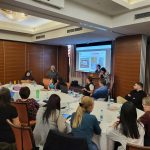
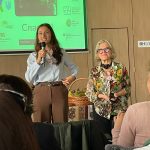
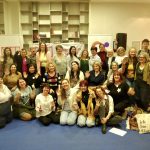
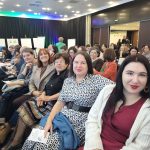
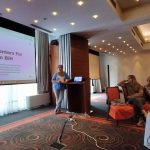
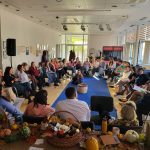
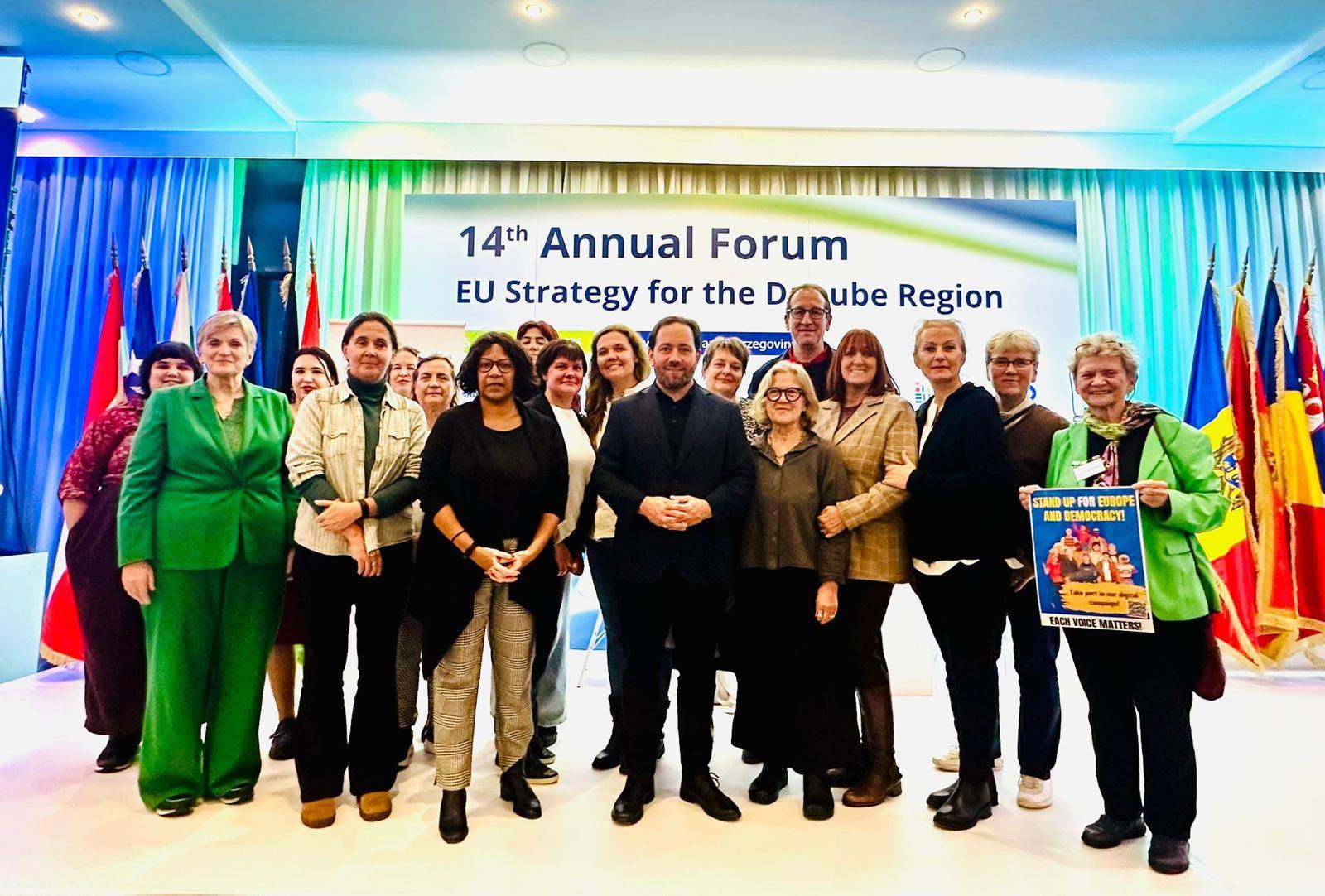
As part of the Mothers for Peace and Ecology project, HCAF represented Hungary at the regional meeting in Sarajevo in October 2025. The meeting brought together Mother Centers and grassroots initiatives from across Central and Eastern Europe, offering a rare opportunity for exchange, reflection, and mutual learning.
Participants shared experiences shaped by different national contexts, yet connected by similar challenges: care overload, under-resourced communities, and the resilience of women-led grassroots action. The conversations highlighted both historical continuity and the need for adaptation in today’s rapidly changing social environment.
For HCAF, the Sarajevo meeting reinforced the importance of cross-border cooperation and regional solidarity. It strengthened relationships within the network and provided inspiration for further development of caring community models in Hungary and beyond.
Looking Ahead
The work initiated through the Mothers for Peace and Ecology project and deepened in Sarajevo is ongoing. Networks are being rebuilt, new actors are joining, and shared language around care, ageing, and community is emerging.
Hekate Conscious Ageing Foundation remains actively involved as a coordinator, partner, and learner in this process. By connecting generations, regions, and sectors, the growing network aims to contribute to a more caring, resilient, and socially connected Europe—where care is recognised not as an invisible burden, but as a foundation of collective well-being.