

 Europe is ageing.
But Europe is also transforming.
Across the continent, we are facing what many describe as a polycrisis: demographic ageing, care workforce shortages, housing unaffordability, climate instability, mental health challenges, territorial inequalities, and increasing social fragmentation. These processes are interconnected. They shape how we live, how we age, how we look after ourselves and how our communities function.
Yet within these challenges lies an unexpected opportunity.
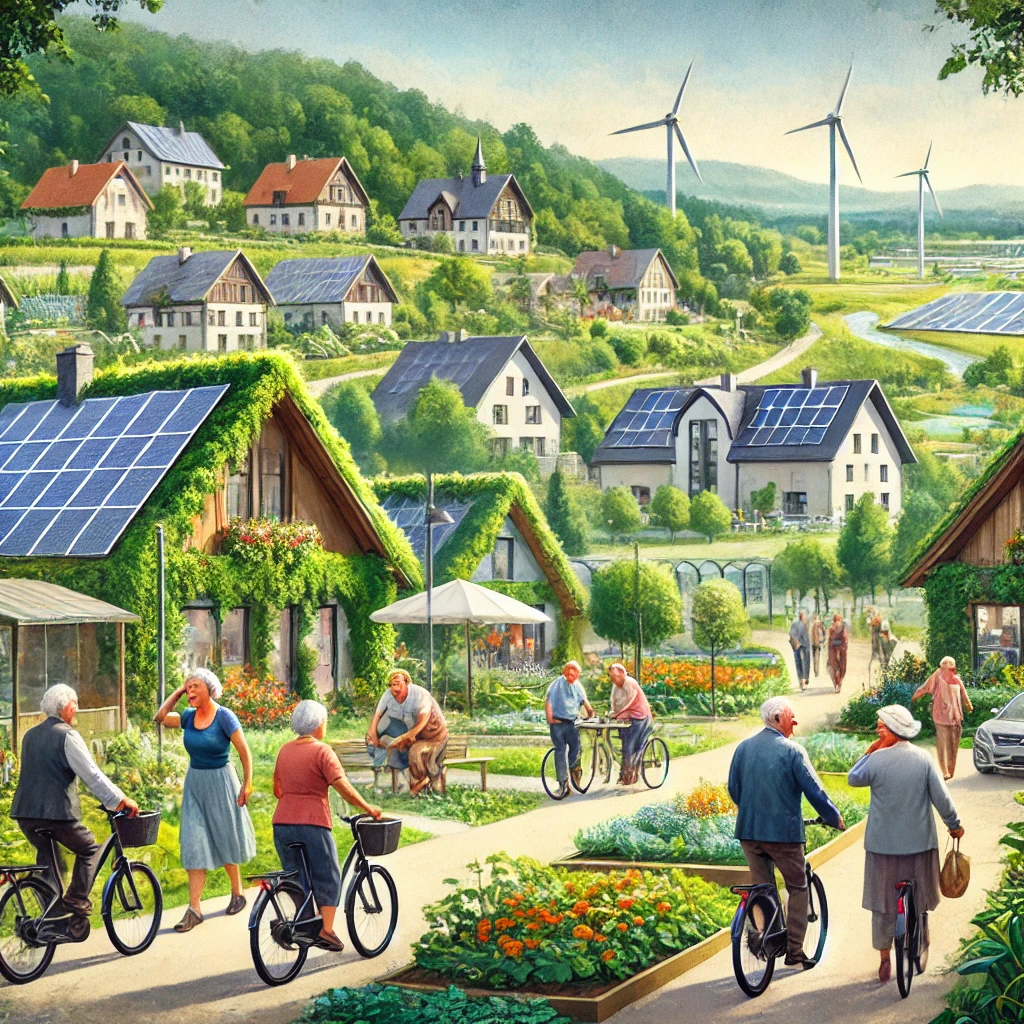
The research on so-called Blue Zones, regions of exceptional longevity such as parts of Sardinia, Okinawa, Nicoya, Ikaria, and Loma Linda, has demonstrated something profound: healthy and active ageing is not primarily a product of wealth, high technology, or sophisticated healthcare systems. It emerges from environments where social cohesion, meaningful daily activity, local food systems, intergenerational integration, and community-oriented living are embedded in everyday life.
What if Europe’s future cooperation model could be inspired by these insights?
A changing East–West dynamic
For decades, the narrative of European development has followed a familiar pattern: Western Europe as the advanced core, Central and Eastern Europe (CEE) as the region catching up. Industrialization, capital accumulation, and welfare state consolidation occurred earlier in the West. Convergence and modernization were framed as the goal for the East.
But today, the criteria of “advancement” are shifting.
In highly urbanized Western regions, we see growing loneliness, lifestyle-related diseases, housing crises, overstretched care systems, and environmental stress. Meanwhile, many CEE regions, especially rural and small-town areas, face depopulation, outward care migration, underinvestment, and welfare weaknesses.
However, these same CEE territories also possess structural characteristics that are increasingly valuable in a Europe seeking resilience:
- Good climatic conditions in many areas
- Available land and relatively affordable housing
- Small-scale agricultural knowledge and food-producing traditions
- Permaculture and local food sovereignty practices
- Lower-consumption mobility patterns
- Still-living intergenerational and community structures
Historically, these features were often perceived as signs of “backwardness”. Today, they look strikingly similar to the structural conditions identified in Blue Zones.
This invites a powerful reframing.
Central and Eastern Europe as a European resource
Instead of viewing CEE primarily as a labour reservoir, especially in the context of care migration to Western countries, we can begin to see it as a strategic European resource in responding to the polycrisis of our time.
The Blue Zones research teaches us that longevity and well-being flourish where:
- Daily life includes natural movement
- Food systems are local, plant-based, and minimally processed
- Older adults remain socially integrated and purposeful
- Communities are compact and walkable
- Consumption patterns are moderate
- Social ties are strong
Many CEE regions already contain elements of this embeddedness. What they often lack is not cultural capacity, but structural support: investment in infrastructure, healthcare access, digital connectivity, sustainable housing renovation, and inclusive governance.
This is where EU-level cooperation becomes crucial.
 From one-way convergence to mutual learning
The future of European cohesion should not be built on a one-directional model of “catching up.” Instead, we can imagine a reciprocal cooperation framework:
- Western Europe contributes institutional capacity, research infrastructure, financial instruments, and policy innovation.
- Central and Eastern Europe contribute territorial assets, ecological potential, small-scale food systems knowledge, and community-based social practices.
Together, this diversity becomes Europe’s strength.
For example:
- Affordable rural properties in CEE regions can support innovative intergenerational housing models.
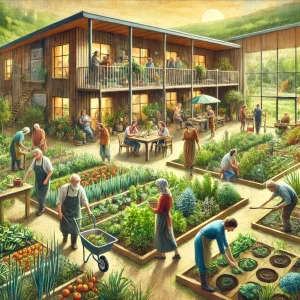
- Available land can enable agro-ecological initiatives linked to climate resilience and food security.
- Community structures can serve as the foundation for conscious ageing programs and social inclusion of older adults.
- EU cohesion policy and rural development funds can explicitly integrate longevity-oriented territorial strategies—not only GDP growth indicators.
This is not about relocating populations en masse. It is about creating enabling frameworks for voluntary mobility, circular migration, hybrid work, and territorial rebalancing.
Ageing as an opportunity
Ageing is too often framed as a fiscal burden: pension pressures, healthcare costs, care shortages.
But the Blue Zones remind us that ageing can also be a driver of innovation.
If we design our environments intentionally, walkable communities, green and blue spaces, local food systems, intergenerational programs, meaningful roles for older adults, ageing populations can become anchors of social stability rather than symbols of decline.
In this context, CEE regions are not peripheries. They are potential laboratories for conscious, sustainable ageing models that serve the entire European Union.
A European Conscious Ageing Alliance
What would it mean to build a European Conscious Ageing Alliance/Network?
- To measure success not only in GDP, but also in healthy life expectancy and social cohesion
- To integrate climate adaptation, housing policy, food systems, and ageing strategy
- To ensure that environmental improvements do not lead to displacement or green gentrification
- To support community-based innovation through EU-level coordination
Such an alliance would treat European diversity as a strategic asset.
- Western Europe does not have all the answers.
- Eastern Europe is not merely catching up.
- Both regions are navigating demographic and ecological transformation.
The future of Europe will depend less on uniformity and more on intelligent cooperation grounded in mutual respect.
Conscious Ageing in a Conscious Europe
At Conscious Ageing, Hungary, we believe that ageing is not simply a biological process. It is a social and spatial phenomenon shaped by how we organize our communities.
- The Blue Zones show us what is possible.
- Central and Eastern Europe shows us where hidden opportunities lie.
- European cooperation provides the scale needed for transformation.
If we approach demographic change with creativity, humility, and partnership, Europe can redefine not only how we age, but how we collaborate.
In an era of polycrisis, perhaps the most powerful European resource is not capital or technology, but our shared diversity and our willingness to learn from one another.
In 2019, we introduced this perspective to Hungarian audiences in an earlier article. That reflection did not remain theoretical. It became the starting point of the JANOSHIDA2030 initiative, launched in cooperation with the Municipality and local community of Jánoshida.
What began as a local dialogue has gradually evolved into a broader regional cooperation. JANOSHIDA2030 aspires to become a living laboratory for conscious ageing and community-based resilience, a potential new Blue Zone area rooted in local strengths, open to innovation, and supportive of both residents and those who wish to join this journey.
This experience shows that redefining European cooperation is not an abstract policy idea. It can begin in small municipalities, grow through trust and partnership, and contribute to a more resilient, connected, and longevity-oriented Europe.

